Free Shot List Template
The tabular shot list your DP and AD actually work from on set. 18 rows, 9 columns, printable A4 landscape PDF. Free, no email required.
What This Template Is
A shot list is a row-by-row plan of every shot you intend to capture. It's the document that turns a script into a shooting schedule. Directors build it during pre-production, the DP cross-checks it against the storyboard, and the 1st AD breaks it down into call sheets.
This template is the format used on most professional indie sets — tabular, printable, single-page per scene where possible. We've stripped it down to the columns that actually get filled in: scene and shot number, shot size, angle, camera movement, lens, action, dialogue, and notes. No fluff.
What Goes in Each Column
Use this as a reference when filling in the template. Standardize the terminology across your production so DP and AD aren't decoding shorthand on set.
Scene #
Scene number from your screenplay (e.g. 12A).
Shot #
Sequential shot number within the scene (1, 2, 3...). Continues across all setups.
Shot Size
Wide, medium, close-up, extreme close-up, or two-shot. Standard taxonomy your DP knows.
Angle
Eye-level, high angle, low angle, dutch, top-down, POV. Keep terminology consistent across the doc.
Movement
Static, pan, tilt, dolly, crane, handheld, gimbal. Be specific about direction (dolly in, pan left).
Lens
Focal length (24mm, 50mm, 85mm) or descriptive (wide, normal, telephoto). DP fills this in if you don't.
Action
What's happening in the shot. One sentence. Reference character names from the screenplay.
Dialogue / Audio
Lines being delivered, music cues, or specific sound design notes.
Notes
Anything else: lighting, blocking, continuity, props. Keep it short — long notes go in the production binder.
How Directors Actually Use This
1. Block the scene mentally first
Before filling the table, walk through the scene in your head. Where do the characters enter and exit? Where's the geography? What's the emotional beat? The shot list captures decisions you've already made — it's not where you make them.
2. Start with the master, then build coverage
Row 1 is usually the master shot — wide, static, captures the whole scene. Then break out the coverage: medium two-shots, singles for each character, inserts on key actions or props. The order in the list isn't the shooting order — that's the AD's job — it's the editorial order.
3. Be specific about camera movement
"Pan" is not enough. "Slow pan left from John to the door" is. The DP and operator need direction, speed, and the start/end points. Vague movement notes are how shots end up missing on set.
4. Mark priorities
Not every shot survives the schedule. Star or color-code the shots that absolutely must be captured (climax beats, performance moments, geography establishers). The rest get cut if you run over.
5. Cross-reference with the storyboard
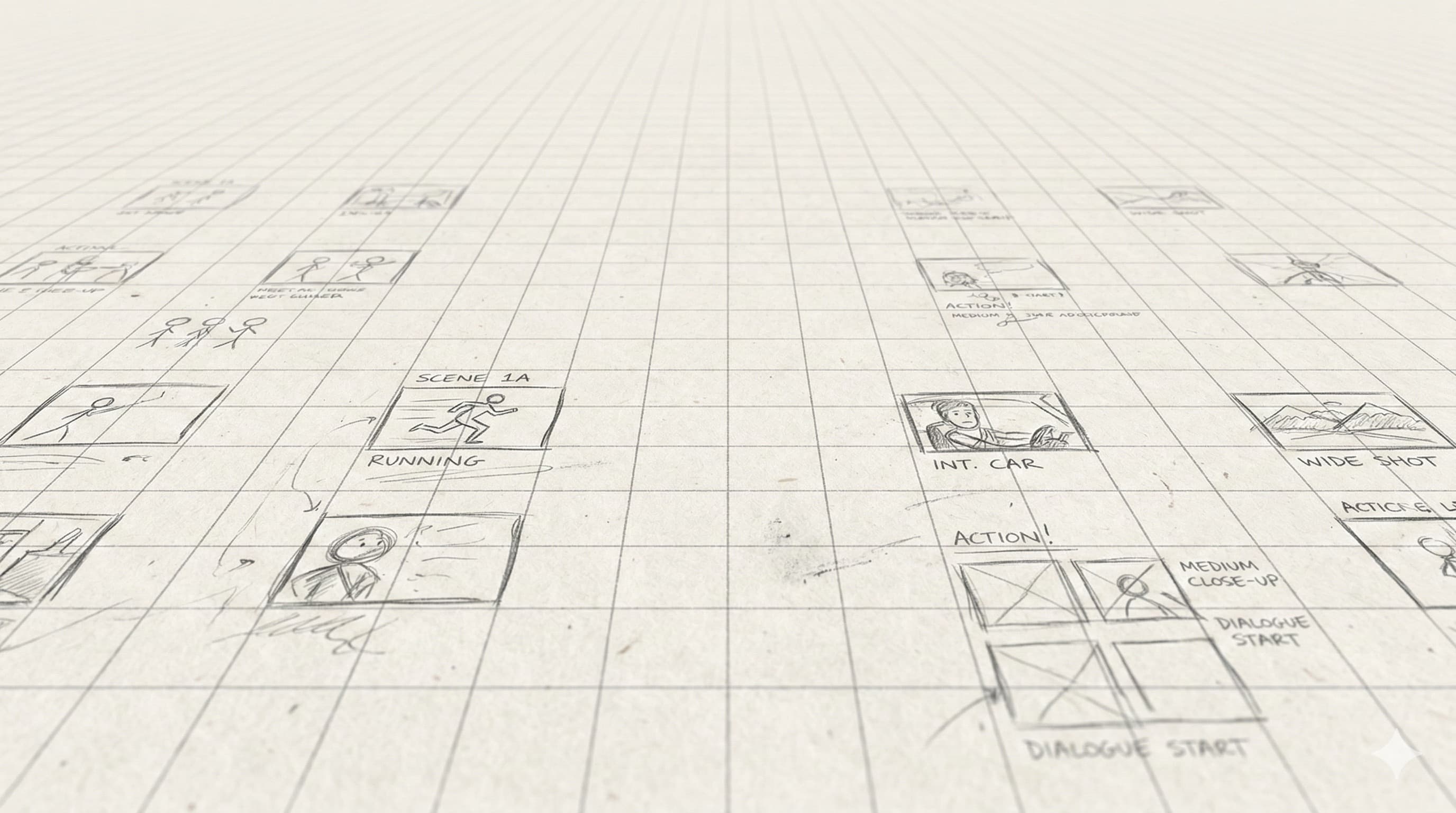
Every row in your shot list should correspond to one frame in your storyboard (or a clear reason there's no board). If a shot exists in the list but not the boards, you haven't visualized it yet — go visualize it before you're on set.
Or Generate the Shot List From Your Screenplay
Filling a shot list manually for a 90-page feature takes 3-7 days. StoryBirdie reads your screenplay (Fountain, PDF, or DOCX) and generates a first-pass shot list automatically — shot size, camera movement, and blocking metadata for every scene. You edit the rows that need adjusting instead of inventing 800 of them from scratch.
Free credits on signup. No credit card.
Related Templates
Screenplay Breakdown Sheet
Scene-by-scene production breakdown: cast, props, wardrobe, VFX, day/night, location. The doc your producer turns into a schedule.
All Templates
Storyboard templates for film, commercial, music video, TV episode, and student projects. Plus shot list and screenplay breakdown sheets.
Frequently Asked Questions
What is a shot list template?+
How is a shot list different from a storyboard?+
How many rows should a shot list have?+
What's the best format for a shot list?+
Can I generate a shot list from my screenplay?+
One project pays for a year.
A single freelance storyboard costs $500–$2,000. StoryBirdie starts free. No credit card required.