The Documentary Storyboarding Paradox
Documentaries are about capturing reality. Storyboarding is about planning fiction. These seem incompatible — and for pure verité filmmaking, they are.
But most documentaries aren't pure verité. They have planned elements: b-roll sequences, reenactments, animated segments, opening title sequences, montages, interview setups. These planned elements benefit from storyboarding just as much as any narrative film.
The question isn't "should I storyboard my documentary?" It's "which parts of my documentary should I storyboard?"
What to Storyboard in a Documentary
B-Roll Sequences
Your documentary's visual identity lives in the b-roll. Interview talking heads give you information. B-roll gives you atmosphere, emotion, and visual storytelling.
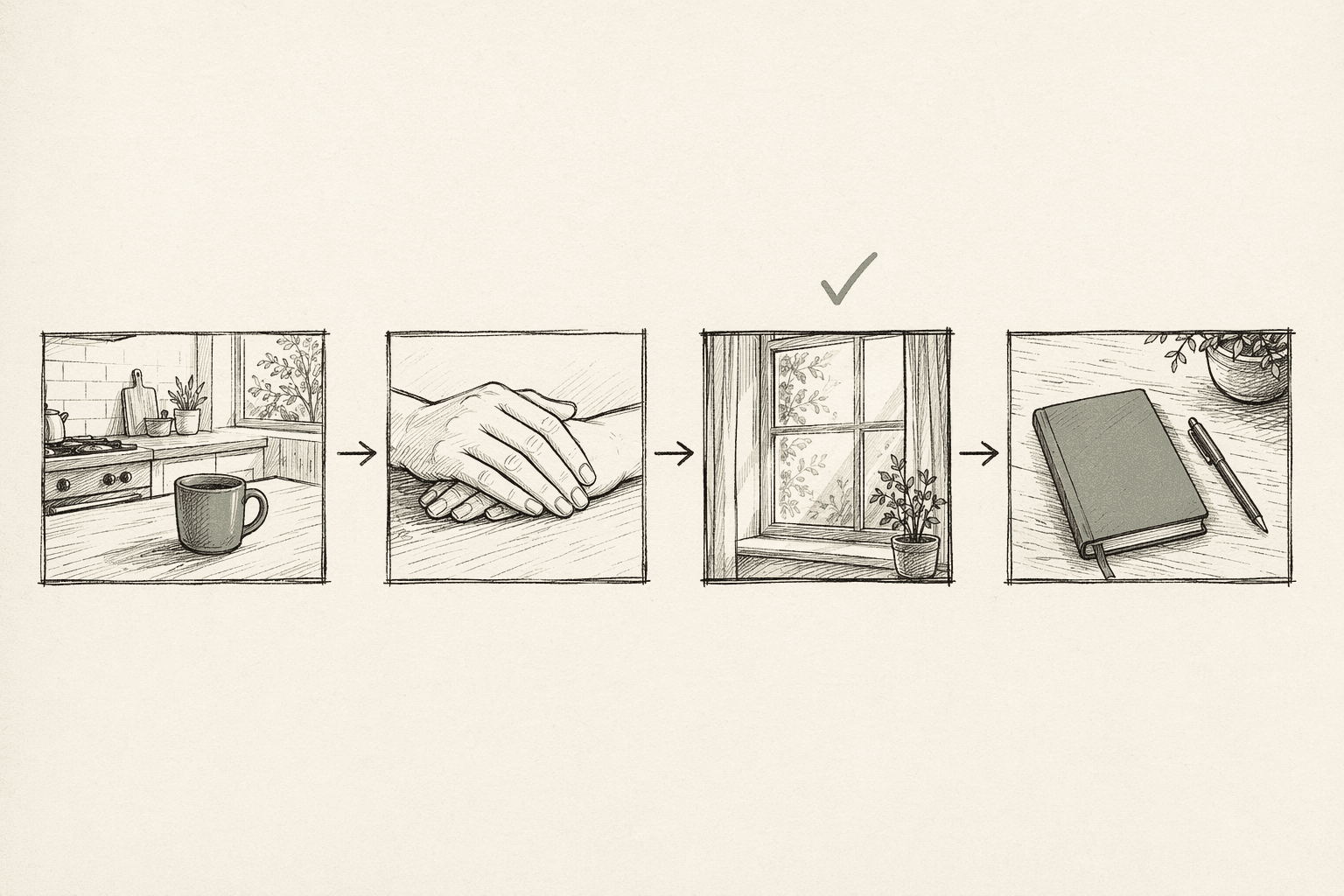
A planned b-roll sequence — following a subject through their morning routine, documenting a location at different times of day, capturing a process from start to finish — benefits enormously from storyboarding. Without a visual plan, you end up with hours of unfocused footage and limited options in the edit.
Storyboard approach: Board the key frames of each b-roll sequence:
- Opening image (what draws the audience in)
- Process beats (the stages of the action you're documenting)
- Transition out (how this b-roll leads into the next section)
- Detail shots (specific close-ups that add texture)
Even rough boards — "wide of workshop, medium of hands on machinery, close-up of finished product" — give your cinematographer a shooting plan instead of a vague directive to "get some coverage."
Reenactments and Dramatic Recreations
If your documentary includes reenactments of historical events or reconstructions of past events, these should be storyboarded as thoroughly as any narrative scene. They have blocking, lighting, camera angles, and editing rhythm — all the elements that benefit from pre-visualization.
Many documentary filmmakers who produce reenactments use storyboards or shot lists for those sequences — they're essentially short narrative scenes.
Storyboard approach: Treat reenactments like short films within your documentary. Full coverage planning: establishing shots, character angles, insert shots, reaction shots.
Animated or Graphics Sequences
Many modern documentaries use animation, motion graphics, or data visualization to explain complex topics. These must be storyboarded (see how many panels you need) because:
- Animators need visual briefs
- Motion graphics have specific timing and composition requirements
- These sequences are expensive to produce — changes after production are costly
Storyboard approach: Board every major keyframe of the animation. Include timing notes, text placement, and transition style. Your animator or motion designer works from these boards.
Opening and Closing Sequences
The opening of your documentary sets the visual tone. The closing leaves the audience with a final emotional impression. Both are worth storyboarding.
Storyboard approach: Board 5-8 frames for the opening sequence: the first image, the title card placement, the transition into the first interview or scene. For the closing: the final interview moment, the closing visual, the end card.
Interview Setups
While you can't storyboard what an interviewee will say, you absolutely should plan the visual setup:
- Camera angle and height
- Background and set design
- Lighting direction
- Frame composition (rule of thirds, headroom, looking room)
- B-camera position (if using two cameras)
Board one reference frame for each interview setup. This ensures visual consistency across multiple interviews and gives your DP a clear target for each setup.
What NOT to Storyboard
Verité Sequences
If you're following a subject in real time — documenting events as they unfold — don't storyboard. The value of verité is spontaneity and authenticity. Planning kills both.
Instead, create a shot checklist: types of shots to look for (wide establishing, over-the-shoulder, close-up reactions, environmental details) without specifying when or where they happen. This gives your cinematographer awareness without scripting.
Interviews (Content)
You can plan the visual setup but not the content. Your interviewee might say something unexpected that changes the direction of the film. Stay flexible with the content while being deliberate with the visual frame.
Unpredictable Events
Protests, performances, natural events, wildlife — anything that happens once and can't be repeated. Your job here is to be prepared and present, not to plan specific shots. A wide lens, a fast camera, and an experienced operator matter more than a storyboard.
The Documentary Storyboard Format
Documentary storyboards look different from narrative storyboards because they serve a different purpose:
| Element | Narrative Storyboard | Documentary Storyboard |
|---|---|---|
| Purpose | Plan every shot | Plan the planned sequences |
| Coverage | Complete | Selective |
| Dialogue | Scripted lines under each frame | No dialogue (or voiceover timing) |
| Flexibility | Shot list is locked | Shot list is a guideline |
| Duration notes | Exact ("3.5 sec") | Approximate ("10-15 sec sequence") |
| Notes | Camera movement, blocking | Context, mood, purpose |
A useful documentary storyboard frame includes:
- The visual composition
- The purpose of the shot ("establishes subject's workspace")
- Approximate duration range
- Technical notes (lens, movement, lighting)
- Where this fits in the narrative arc
The Look Book Alternative
For documentaries with a strong visual style but flexible shooting, a look book can replace or supplement a storyboard. (If you're deciding between a visual storyboard and a text-based shot list, see storyboard vs shot list.)
A look book is a collection of reference images — photos, film stills, paintings — that define the visual language you're pursuing. It communicates mood, color palette, composition style, and framing philosophy without specifying exact shots.
When to use a look book instead of a storyboard:
- You're shooting over weeks or months and situations will change
- Multiple cinematographers will shoot at different times
- The subject matter is unpredictable but the visual style should be consistent
- You want to guide without constraining
When to use both:
- Planned sequences get storyboards
- Unplanned shooting follows the look book's visual language
Practical Template: B-Roll Sequence Storyboard
Here's a worked example for a documentary about a ceramicist:
Sequence: Morning in the studio (90-second b-roll)
| Frame | Shot | Duration | Purpose |
|---|---|---|---|
| 1 | Wide: exterior of studio, morning light | 5-8 sec | Establish location, time |
| 2 | Medium: subject opens door, enters | 3-5 sec | Introduce character through action |
| 3 | Close-up: hands on raw clay | 3-5 sec | Tactile detail, craft emphasis |
| 4 | Medium: subject at wheel, begins centering | 8-12 sec | Main action, let the process breathe |
| 5 | Close-up: clay shaping, water, hands | 5-8 sec | Beauty shot, texture |
| 6 | Wide: studio atmosphere, subject small in frame | 5-8 sec | Context, the space itself |
| 7 | Detail: shelf of finished pieces | 3-5 sec | End product, transition to interview |
7 frames. 30-50 seconds of specific planned coverage. The remaining 40-60 seconds comes from additional angles and moments discovered on the day.
This is the right ratio for documentary storyboarding: plan 50-60% of your coverage, discover 40-50% on the day.
Frequently Asked Questions
Ready to speed up your pre-production?
StoryBirdie turns your screenplay into a professional storyboard in minutes. See pricing or jump straight in.
About the author
Aayush is co-founder and director at StoryBirdie. He's a screenwriter, director, stand-up comedian, and full-stack developer — co-founder of Kathmandu's Comedy Tuk Tuk, with directing and writing credits on shorts, music videos, and comedy projects. He builds StoryBirdie on the conviction that storyboarding is expensive, time-consuming, and important — and that a tool for it should serve the filmmaker's vision, not replace it. StoryBirdie is currently in use on a Nepali feature, a Sri Lankan TV commercial, and at one of Nepal's largest production houses. Based in Kathmandu, Nepal.
Keep reading
- How to Storyboard for Animation: A Step-by-Step GuideStoryboarding for animation, step by step: timing, staging, acting through drawing, and the animatic pipeline. With real examples directors use.·8 min read
- Storyboarding for Comedy: Timing Is VisualHow to storyboard comedy scenes where timing, framing, and editing rhythm are the punchline. Practical techniques for visual comedy.·8 min read
- Storyboarding for Horror Films: A Director's Visual GuideHow to storyboard horror scenes that build dread, deliver scares, and control pacing. Camera techniques, framing, and visual storytelling for horror.·9 min read
- How to Storyboard a Commercial: A Director's WorkflowStoryboarding a commercial: timing, product shots, client-approval drafts, and the agency workflow that keeps clients and crew aligned.·8 min read