Horror Lives in the Frame
Jump scares are easy. Dread is hard.
Any director can startle an audience with a loud noise and a sudden cut. But the horror films that stay with people — Hereditary, The Shining, It Follows — build their terror through visual composition. The camera placement. The negative space. What's in focus and what isn't. What the audience can see and what they can't.
Storyboarding is where that visual architecture gets designed. A horror storyboard isn't just "what happens in this shot" — it's a blueprint for manipulating the audience's attention and anxiety through framing, pacing, and the strategic use of visual information.
The Visual Language of Dread
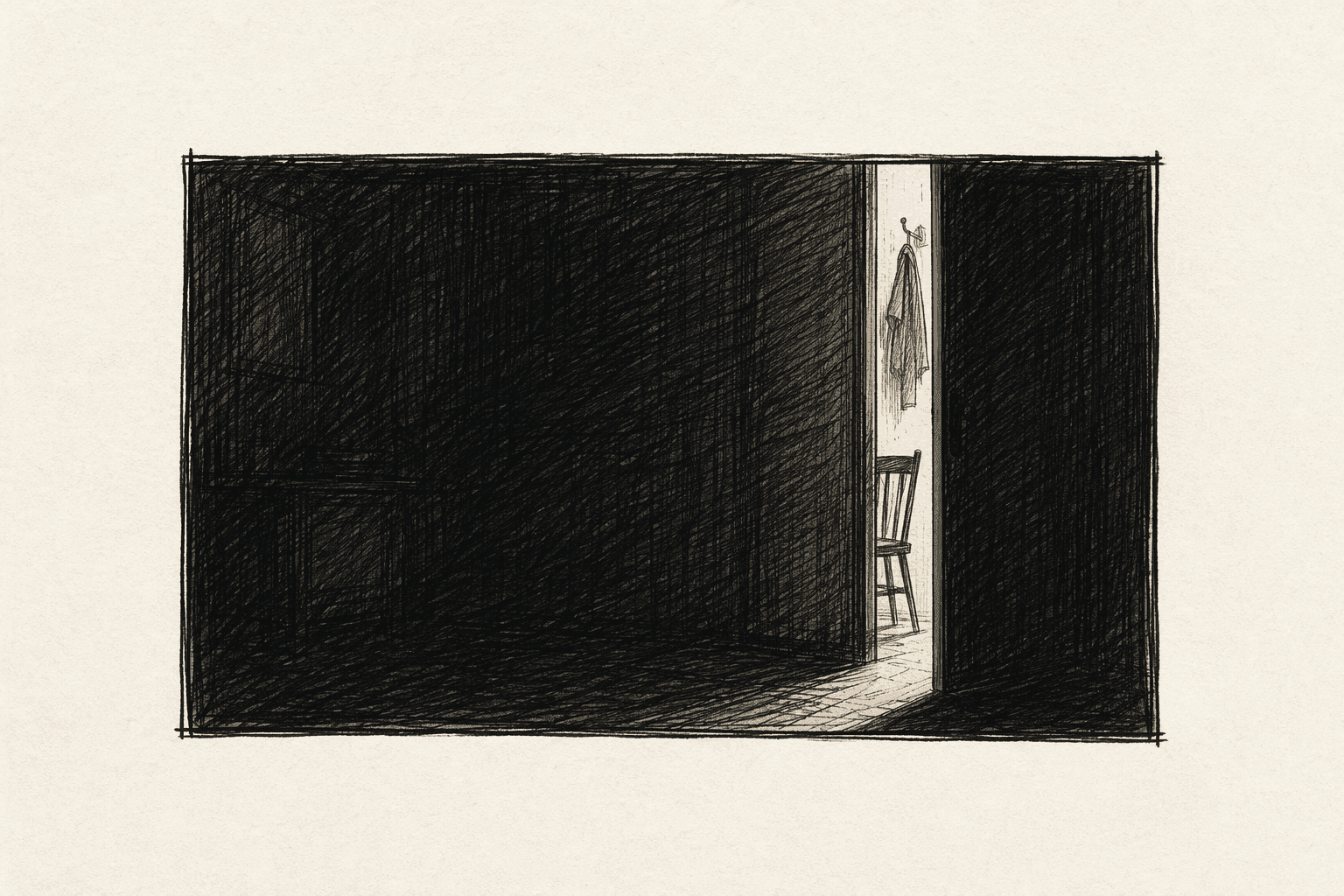
Horror has its own camera grammar. These techniques work because they exploit how human perception processes threat:
Negative Space
The most powerful horror tool costs nothing. Leave empty space in the frame — above a character's head, behind them, in a dark doorway at the edge of the composition. The audience's eye goes to it involuntarily. They know something will appear there. The tension builds before anything happens.
Storyboard application: When boarding tension-building shots, draw the character occupying only 30-40% of the frame. Leave the rest empty or dark. In your storyboard notes, mark the negative space as intentional so your DP doesn't fill it with lighting.
Films like It Follows use negative space extensively in their sustained dread sequences. The audience spends the entire film scanning the background.
Depth of Field Manipulation
Rack focus is a horror staple for a reason. Pulling focus from a foreground character to a background threat (or vice versa) directs the audience's attention while creating the sensation that the threat was there the whole time.
Storyboard application: Board rack-focus moments as two frames — one showing the focus state before, one showing focus after. Annotate with "rack to BG" or "rack to FG" so your DP and focus puller can prep.
Static Camera
In horror, a static camera is more unsettling than a moving one. Movement implies presence — someone is operating the camera, someone is there. A locked-off static shot feels like surveillance: cold, detached, observational. The audience feels watched rather than guided.
Storyboard application: Annotate static shots explicitly — "LOCKED OFF, no movement" — because DPs naturally want to add subtle movement. In horror, stillness is a tool.
The Shining uses static symmetrical compositions for the Overlook Hotel corridors. The geometric perfection is disturbing because real spaces aren't that symmetrical. The camera's refusal to move tells the audience that the hotel itself is watching.
Low Camera Heights
Horror cameras tend to sit lower than standard dramatic coverage — waist height or lower. (For a full breakdown of how camera angles affect audience perception, see our reference guide.) This subtly distorts spatial perception, making rooms feel larger and ceilings feel higher. It also puts the audience at a vulnerable height — the height of a child, the height of someone kneeling or fallen.
Storyboard application: Note camera height in your frames. "Camera at 3ft" reads very differently than "Camera at 5ft" even with the same composition.
Storyboarding the Three Horror Structures
Structure 1: The Slow Build
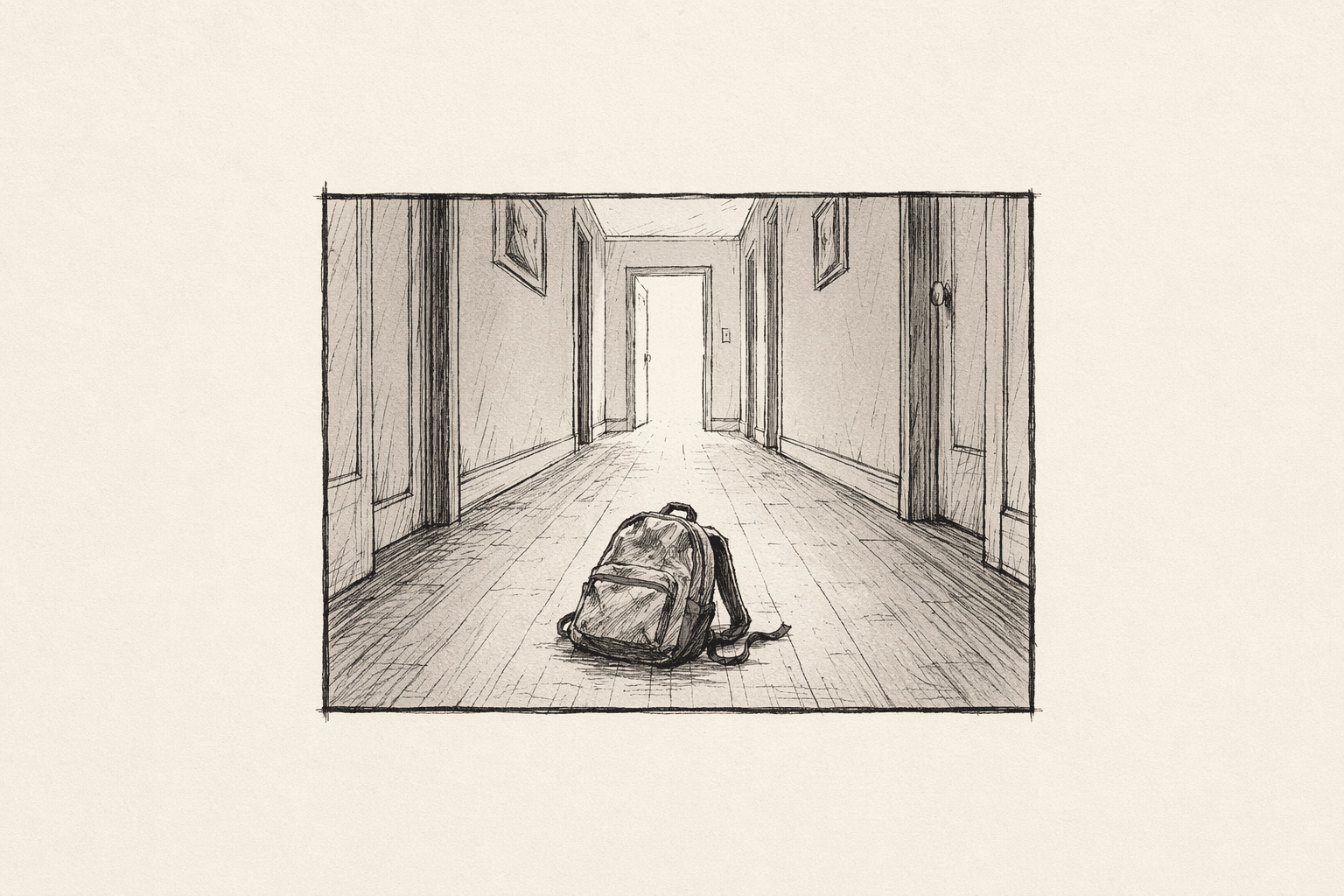
The majority of effective horror scenes follow a buildup pattern: Normal → Signal → Escalation → Payoff → Aftermath.
| Phase | Duration | Camera Approach | Purpose |
|---|---|---|---|
| Normal | 15-30 sec | Wide, gentle movement, warm lighting | Establish baseline comfort |
| Signal | 5-10 sec | Something enters the frame edge or sound cues tension | Alert the audience |
| Escalation | 20-60 sec | Tighter framing, slower movement, negative space grows | Build dread systematically |
| Payoff | 1-3 sec | Sharp cut, extreme angle change, or sudden reframe | Deliver the scare |
| Aftermath | 5-15 sec | Hold on reaction, then slowly widen | Let the audience breathe |
Board the transitions between phases. The shift from Normal to Signal is the most important storyboard moment — it's where you plant the visual seed of unease. Often it's as simple as a door that was closed now being slightly open, or a shape in the background that wasn't there before.
Structure 2: The Sustained Dread Scene
Some horror scenes don't have a payoff — they maintain dread for 2-5 minutes without release. Hereditary's dinner scene. The Witch's forest scenes. Midsommar's daylight horror.
Storyboard approach: Board these scenes with a consistent visual language that never breaks:
- Fixed focal lengths (no zooming — zooms feel human and controlled)
- Slow, deliberate camera movement (or none at all)
- Widening shot sizes over time (the character becomes smaller in the frame)
- Decreasing amounts of visible detail (pulling into shadow, into fog, into darkness)
The key is restraint. The storyboard should feel clinical, not chaotic.
Structure 3: The Chase/Attack
Fast horror — being pursued, being attacked. This is where storyboarding becomes essential because the editing rhythm is predetermined.
Storyboard approach:
- Board every major beat of the chase (corner turned, door opened, obstacle encountered)
- Pre-plan the cutting rhythm: 2-beat shots during the chase, then hold for 4-8 beats when the character pauses (false safety)
- Include POV shots from the threat's perspective — these create complicity and dread
- Board the "trap" moment: the character thinks they're safe, camera slowly reveals they're not
Effective horror chase sequences typically use short, rapid shots during pursuit and noticeably longer holds during false-safety pauses. Pre-plan this rhythm in your storyboard. (This shares techniques with fight scene storyboarding — the same emphasis on choreographed beats applies.)
Genre-Specific Camera Techniques
The Frame Within a Frame
Shoot through doorways, windows, mirrors, or other architectural elements to create a frame within the frame. This creates a voyeuristic quality — the audience is watching through something, which implies hiding, which implies danger.
Storyboard tip: Draw the architectural frame as a dark border around your storyboard composition. Note "shoot through [element]" for your DP.
The Slow Push-In
A barely perceptible dolly push-in on a static subject builds dread through the sensation that something is approaching — but it's the camera, not a character. The audience feels the approach subconsciously.
Rate: 2-3 inches per second over 10-20 seconds. Any faster and it becomes noticeable. The power of the slow push-in is that the audience feels uneasy without knowing why.
The Unmotivated Pan
The camera pans to empty space for no apparent reason. There's nothing there. But the audience is now hyperaware of that space. When the camera pans back, the audience is primed for something to have changed.
Board this as three frames: (1) Normal composition, (2) Pan to empty space — hold, (3) Pan back — has something changed? Even if nothing has, the tension was real.
The Background Threat
A figure or shape appears in the background, out of focus, while the foreground character is unaware. The audience sees it. The character doesn't. This is dramatic irony at its most primal — we want to warn them but can't.
Storyboard tip: Draw the background figure as a vague silhouette, not a detailed character. The ambiguity is the point.
Common Horror Storyboarding Mistakes
Too many scares. If every scene has a scare beat, none of them land. Board the quiet scenes too — the normalcy between scares is what makes the scares work.
Jump scare dependence. A jump scare is a single storyboard frame preceded by quiet and followed by noise. That's not directing — that's a reflex trigger. Board scenes that build dread through sustained visual tension, not just startle moments.
Showing the monster too early. Keep the threat vague in your storyboards for as long as possible. Silhouettes, shadows, partial views. The audience's imagination fills in details more terrifying than anything you can show. Ridley Scott's Alien is built on this principle — the xenomorph has roughly 4 minutes of screen time in a 2-hour film.
Forgetting sound design in visual planning. Your storyboard — and your shot list — should include sound notes: where silence falls, where ambient sound drops out, where the score enters. Sound and image are inseparable in horror — plan them together.
Frequently Asked Questions
Ready to speed up your pre-production?
StoryBirdie turns your screenplay into a professional storyboard in minutes. See pricing or jump straight in.
About the author
Aayush is co-founder and director at StoryBirdie. He's a screenwriter, director, stand-up comedian, and full-stack developer — co-founder of Kathmandu's Comedy Tuk Tuk, with directing and writing credits on shorts, music videos, and comedy projects. He builds StoryBirdie on the conviction that storyboarding is expensive, time-consuming, and important — and that a tool for it should serve the filmmaker's vision, not replace it. StoryBirdie is currently in use on a Nepali feature, a Sri Lankan TV commercial, and at one of Nepal's largest production houses. Based in Kathmandu, Nepal.
Keep reading
- How to Storyboard for Animation: A Step-by-Step GuideStoryboarding for animation, step by step: timing, staging, acting through drawing, and the animatic pipeline. With real examples directors use.·8 min read
- Storyboarding for Comedy: Timing Is VisualHow to storyboard comedy scenes where timing, framing, and editing rhythm are the punchline. Practical techniques for visual comedy.·8 min read
- Storyboarding for Documentaries: When and HowDo documentaries need storyboards? When to plan visuals, when to stay flexible, and how to storyboard the planned parts of your doc.·8 min read
- How to Storyboard a Commercial: A Director's WorkflowStoryboarding a commercial: timing, product shots, client-approval drafts, and the agency workflow that keeps clients and crew aligned.·8 min read