Free Music Video Storyboard Template
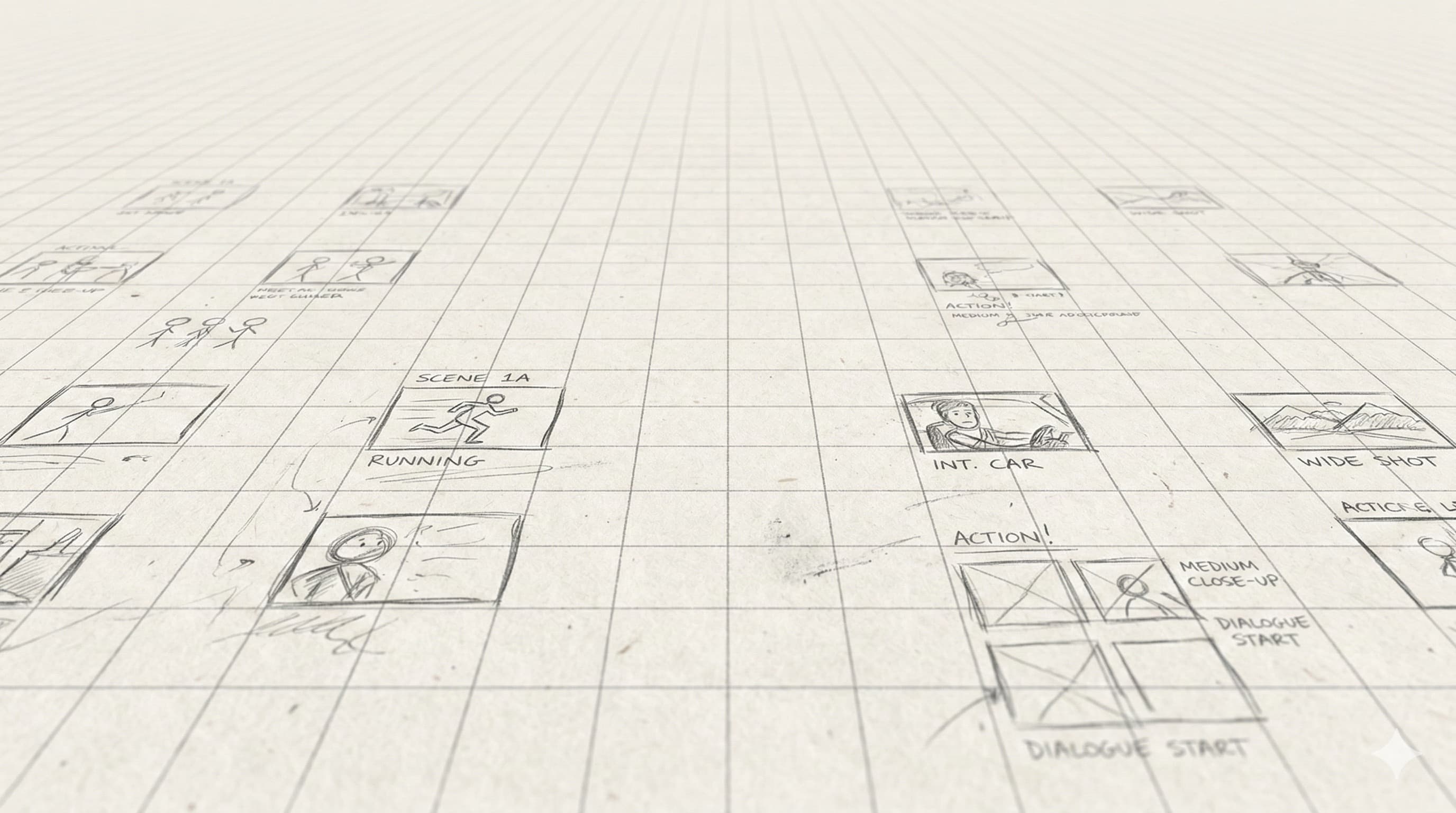
Three-panel layout with timestamp, lyric, and beat-marker rows. Designed for beat-synced visual planning. Free PDF download. Or storyboard from your track and treatment with AI.
What This Template Is
Music videos are tempo-driven — frames live inside bars, not minutes — so the storyboard has to mark beats, drops, and lyric hits frame by frame. This template's annotation row pairs each frame with a timestamp, the lyric covered, and any beat-sync markers.
It's the format directors send to labels for treatment approval and that DPs use to plan setups for performance day. Use it for performance videos, narrative videos, and hybrid concepts.
How Directors Actually Use This
1. Get the final mix and import the markers
Do not storyboard against a demo or a rough mix. Tempo, drops, and structure can change. Wait for the final mix (or as close as you can get) before you commit frames to beats.
2. Mark the song structure on the boards
Verse 1, pre-chorus, chorus, drop, bridge, outro. Each frame gets a section tag in the annotation row. This is how DP and editor cross-reference your boards against the audio waveform.
3. Storyboard the chorus first
The chorus is the hero section — the moments that get re-cut into trailers, social clips, and the artist's reel. Board it first, in detail. Verses can be looser.
4. Lock the lyric-image moments
Any frame where a lyric hits and the visual matches it (literal or contrast) is a planned moment. Mark those frames with a star. They're your A-roll on shoot day.
5. Mix performance and narrative frames clearly
Most videos cut between performance (artist lip-syncing) and narrative (everything else). Label each frame P or N in the annotation row so the schedule can group setups efficiently.
Or Generate Boards From Your Track and Treatment
A 3-minute video takes 25-50 hand-drawn boards plus a revision round with the label. StoryBirdie generates a full board set from your treatment in minutes — beats and lyrics annotated per frame. Use the output as your label submission or the starting point for hand revisions.
Free credits on signup. No credit card.
Frequently Asked Questions
How detailed should a music video storyboard be?+
Do labels actually look at storyboards?+
Can AI storyboard a music video?+
One project pays for a year.
A single freelance storyboard costs $500–$2,000. StoryBirdie starts free. No credit card required.