Free Standard Film Storyboard Template
The 3-panel landscape layout that's been the default on film sets for fifty years. Free, printable, A4. Or skip the blank page and generate frames from your screenplay with AI.
What This Template Is
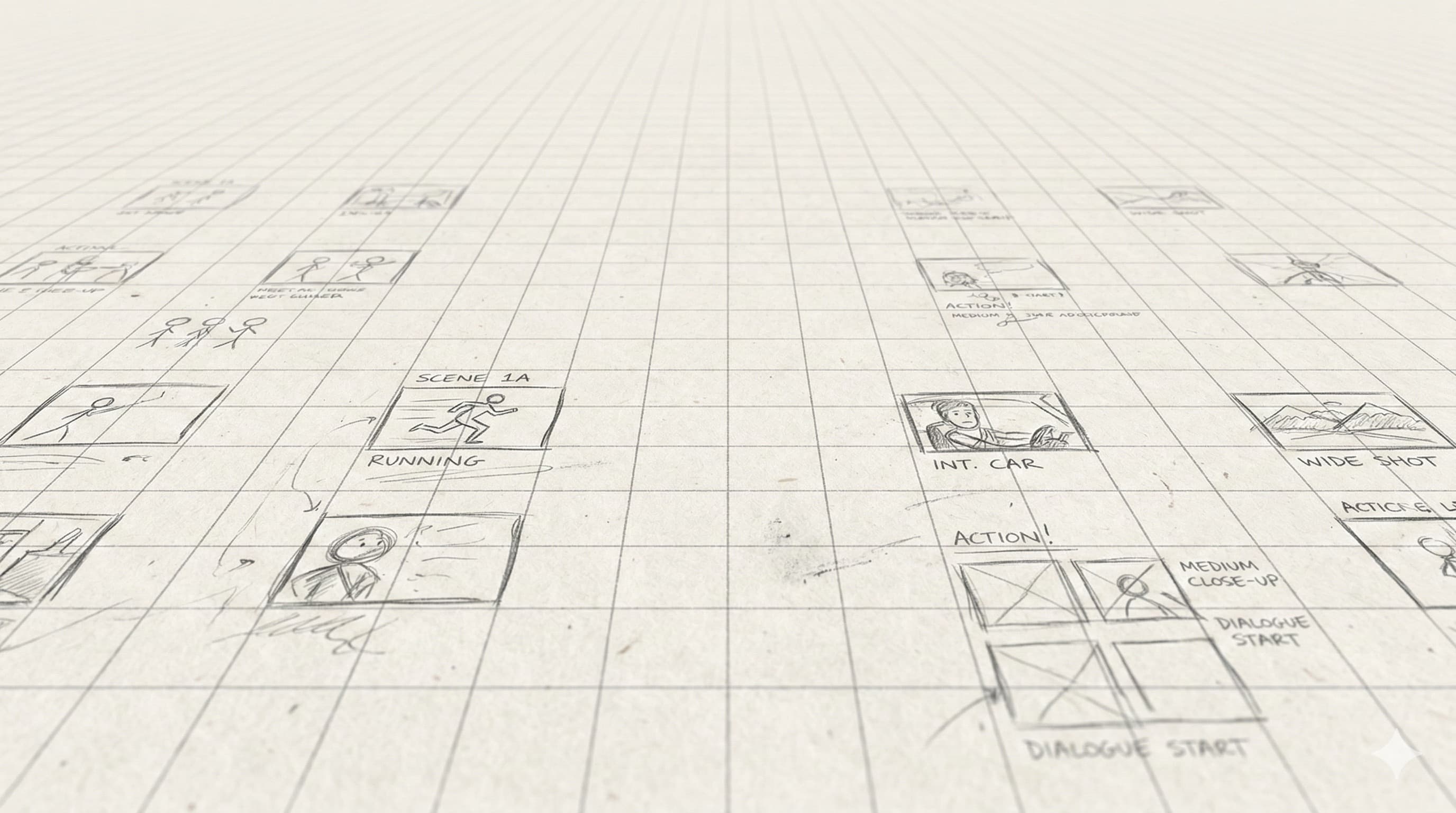
A storyboard is a visual sequence of frames showing what the camera sees, shot by shot. The standard film layout is three landscape frames per A4 page, with annotation rows underneath each frame for shot number, scene number, description, dialogue, and camera notes.
This template is the format film schools teach and that most working DPs and directors recognize on sight. It's deliberately minimal — no logos, no decorative borders, no inspirational copy — because the frames are doing the talking.
How Directors Actually Use This
1. Print double-sided on A4
Six frames per sheet keeps a scene on one or two pages. Use 80-100 gsm paper if you're drawing with markers — anything lighter bleeds.
2. Number every frame
Frame 1 = shot 1. Sounds obvious, but the most common boards-on-set problem is mismatched numbering between the boards and the shot list. Keep them aligned.
3. Draw composition, not art
Stick figures and rectangles for objects work fine. The point is to communicate composition, camera angle, and screen geometry — not to win a drawing contest.
4. Annotate every frame
Shot size (wide / medium / close), camera angle, movement (static / pan / dolly), and any dialogue or sound notes. Frames without annotations are decoration.
5. Tape them up on set
Print copies for the director, DP, 1st AD, and operator. Tape them near the monitor at video village. They get marked up during the shoot — that's the point.
Or Generate Storyboard Frames Automatically
Drawing 800 frames for a feature by hand takes weeks. StoryBirdie reads your screenplay and generates visual frames for every shot — composition, character positions, camera angle. You edit the frames that need adjusting instead of inventing them from scratch.
Free credits on signup. No credit card.
Guides That Pair With This Template
Background reading from the StoryBirdie blog on the technique behind the template.
How to Storyboard for Animation: A Step-by-Step Guide
Storyboarding for animation, step by step: timing, staging, acting through drawing, and the animatic pipeline. With real examples directors use.
Famous Storyboard Examples From Iconic Films
Real storyboard examples from Hitchcock, Spielberg, Ridley Scott, and more. See how master directors planned their most iconic shots.
How to Storyboard a Commercial: A Director's Workflow
Storyboarding a commercial: timing, product shots, client-approval drafts, and the agency workflow that keeps clients and crew aligned.
Frequently Asked Questions
What aspect ratio should storyboard frames use?+
How many frames does an average scene need?+
Do I need to storyboard every shot?+
One project pays for a year.
A single freelance storyboard costs $500–$2,000. StoryBirdie starts free. No credit card required.