AI in Pre-Production Is Practical, Not Magical
The conversation around AI in filmmaking tends to swing between two extremes: "AI will replace directors" and "AI is useless for real filmmaking." Both are wrong.
The reality is more mundane and more useful. AI in pre-production handles specific mechanical tasks that used to eat hours of a director's time. It doesn't make creative decisions. It doesn't have taste. It doesn't understand why a low-angle shot of a character matters thematically.
What it does: it processes, organizes, and visualizes information from your screenplay so you spend less time on administrative labor and more time on the decisions that actually matter.
Here's where AI is genuinely useful in pre-production today, where it's getting better, and where it falls short.
Script Analysis: The Most Underrated AI Application
Before AI, script analysis was manual. A director would read the screenplay multiple times, marking up elements scene by scene: characters present, props needed, wardrobe changes, location requirements, time of day, continuity notes.
This work is essential for production planning. It's also tedious, error-prone, and the kind of detailed inventory work that humans do poorly over long documents. We skim. We miss the coffee cup on page 12 that becomes important on page 67. (For more on this, see how to catch script continuity errors.) We don't notice that a character is described as wearing a jacket in scene 3 but the jacket is gone in scene 4 with no transition.
AI excels here because it reads every line with equal attention. It doesn't skim. It doesn't get tired on page 40.
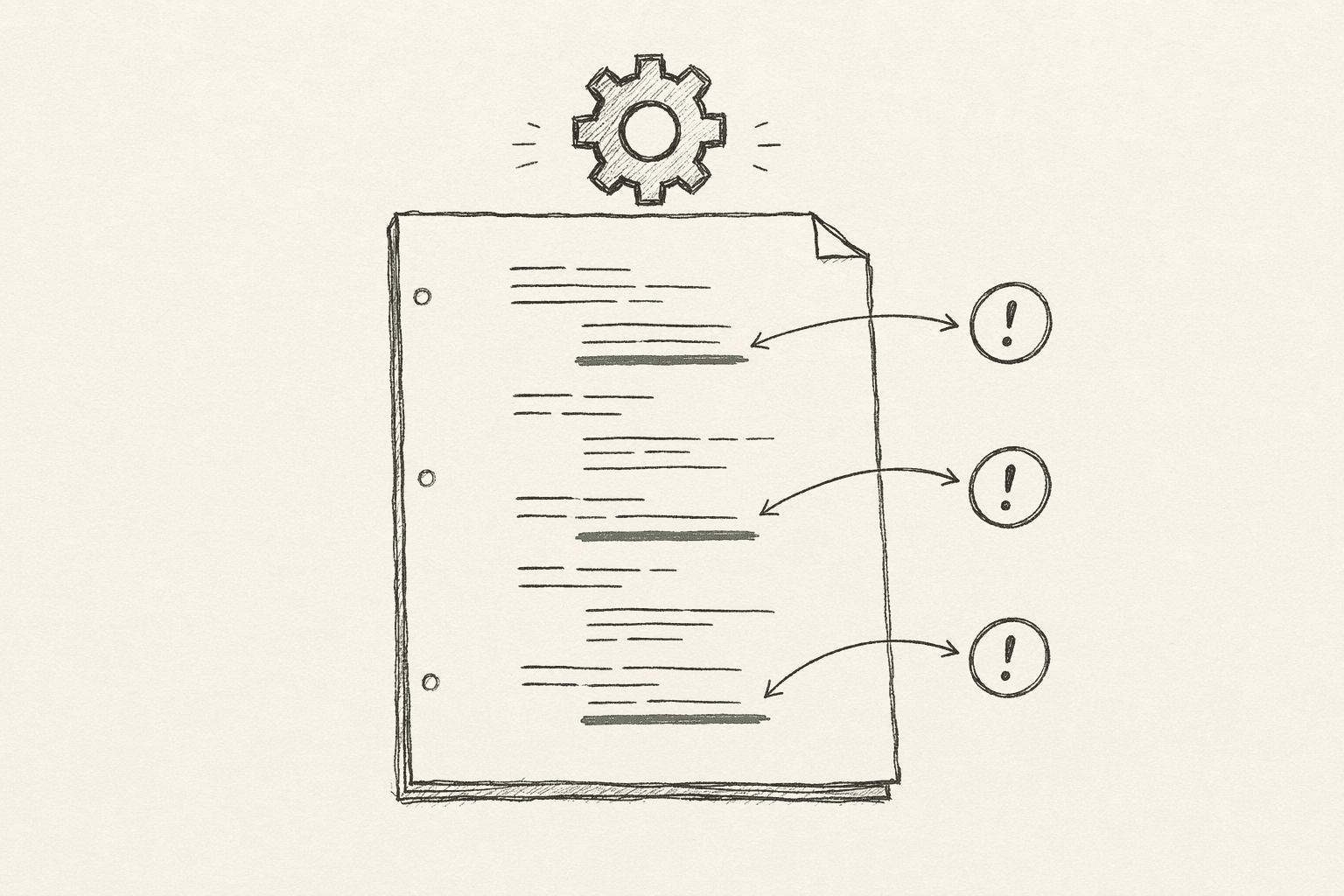
What AI script analysis does well:
- Extracts all characters, props, wardrobe elements, and locations from the screenplay
- Identifies continuity issues (a prop that appears and disappears, a time-of-day inconsistency)
- Flags blocking that might be spatially impossible given the described location
- Maps character emotional arcs across scenes
What it can't do:
- Understand subtext. If a character says "I'm fine" while their world is falling apart, the AI reads "fine." A human reads despair.
- Judge dramatic intent. The AI can't tell you whether a continuity break is a script error or a deliberate creative choice (like a jump cut in time).
- Replace the director's interpretation. The analysis gives you facts. You supply the meaning.
Shot List Generation: AI as a First Draft
Traditionally, creating a shot list from a screenplay is a director's exercise in decision-making: how do I visually cover this scene? What angles? What sizes? How many setups?
AI shot list generators produce a working first draft based on filmmaking conventions. Dialogue scenes get shot/reverse-shot coverage with establishing wides. Action sequences get wider, faster-cutting coverage. Emotional moments get tighter framing.
Where this helps:
- Speed. A 15-shot list for a complex scene takes seconds instead of an hour.
- Completeness. The AI doesn't forget coverage angles. It includes the insert shots and reaction shots that directors sometimes plan to shoot but forget to list.
- Iteration. Want to see how the scene plays with a completely different coverage approach? Regenerate in seconds.
Where it falls short:
- Convention over creativity. AI defaults to standard coverage patterns. It won't suggest the unusual angle or the unconventional cutting rhythm that makes a scene distinctive.
- No understanding of your visual language. If you consistently use wide shots to create isolation and close-ups for connection, the AI doesn't know that. You impose your visual grammar on its output.
- No budget awareness. The AI might suggest a tracking shot that requires a dolly you don't own. You adjust for practical constraints.
The right way to use AI-generated shot lists: treat them as the skeleton, not the finished product. The AI gives you comprehensive conventional coverage. You add your creative fingerprint.
Storyboard Generation: Pre-Viz for Everyone
This is where AI has made the most visible impact. Storyboarding used to require either drawing skill or a storyboard artist. Now any director can produce visual storyboard frames from text descriptions or directly from their screenplay.
The state of AI storyboarding in 2026:
- Frame quality is sufficient for crew communication. Not production art, but clear enough to show framing, composition, and blocking.
- Character consistency across frames is improving but not perfect. The same character might look slightly different from frame to frame.
- Generation speed is fast — a full scene's storyboard in 2-3 minutes.
- Iteration is the real advantage. Don't like the framing? Edit the description, regenerate. Try a different angle. Explore different compositions. This iterative speed is what hand-drawn storyboarding can't match.
What directors actually use AI storyboards for:
- Communicating shot intent to their DP before the shoot
- Giving the AD a visual reference for scheduling (complex shots are obvious at a glance)
- Exploring different visual approaches for a scene before committing
- Creating pre-viz for investor decks and pitch presentations
- Planning VFX shots with approximate composition references
Where AI Is Getting Better
Character consistency. Early AI image generators created wildly different-looking characters from frame to frame. Current tools maintain clothing, build, and general appearance much better. It's not perfect, but it's usable for pre-viz.
Understanding filmmaking language. "Medium close-up with a slight low angle on a character in three-quarter view" means something specific. Current AI tools understand these terms and produce frames that match the description. Two years ago, they didn't.
Speed and cost. What cost $50-100 per frame with a storyboard artist now costs pennies with AI. This democratization means indie directors with no budget can pre-visualize their films for the first time.
Where AI Falls Short (Honestly)
No creative judgment. AI can generate a technically competent storyboard. It cannot generate a brilliant one. The difference between a good storyboard and a great one isn't technical competence — it's the creative choices that surprise, provoke, or move the audience. Those come from the director, not the AI.
Complex spatial reasoning. For scenes with intricate blocking — multiple characters moving through a space, vehicles, crowds — AI still struggles to maintain spatial coherence across frames. It might place a character on the wrong side of a room between shots.
Style specificity. If you want your storyboard to match a very specific visual style (noir lighting ratios, Wes Anderson symmetry, Wong Kar-wai saturated close-ups), you'll need to iterate extensively with detailed descriptions. The AI defaults to a neutral visual style.
Emotional nuance. A great storyboard artist captures the emotional weight of a moment in the composition — the way a character hunches in defeat, the emptiness of a wide shot after someone leaves. AI generates technically correct compositions that sometimes miss the emotional register.
The Practical Director's AI Toolkit
Here's what a practical AI-assisted pre-production workflow looks like today:
| Phase | AI's Role | Director's Role |
|---|---|---|
| Script analysis | Inventory elements, flag issues | Interpret subtext, resolve ambiguities |
| Shot listing | Generate conventional coverage | Override with creative vision, cut for budget |
| Storyboarding | Produce visual frames from descriptions | Refine composition, impose visual language |
| Scheduling | (Not yet AI — but data feeds into AD tools) | Final scheduling decisions |
The pattern is consistent: AI handles the mechanical, the director handles the meaningful.
A Note on the Ethics
Some filmmakers are uncomfortable using AI tools because of concerns about training data (were storyboard artists' work used without consent?) and job displacement (will AI replace storyboard artists?).
These are valid concerns. Here's our perspective:
AI storyboard tools don't replace the storyboard artists who work on studio films. Those artists produce production-quality work with emotional depth and stylistic precision that AI can't match. The directors who hire them will continue to hire them.
What AI replaces is the absence of storyboarding. The indie directors who never storyboarded because they couldn't draw and couldn't afford an artist now have an option. The student filmmakers who planned shots in their heads because no budget existed for pre-viz now have an option. AI doesn't take work from storyboard artists — it gives pre-viz capability to directors who never had it.
Ready to speed up your pre-production?
StoryBirdie turns your screenplay into a professional storyboard in minutes. See pricing or jump straight in.
About the author
Amit is co-founder and engineering lead at StoryBirdie. He owns the screenplay analysis pipeline, AI shot-list generator, and storyboard image stack — frontend, backend, AI, and DevOps. Alongside StoryBirdie he leads product, research, and engineering at Noumenal AI (AI research lab) and previously built Blintic AI solo and worked as ML Engineer and team lead at Docsumo. A 21-year-old engineer based in Kathmandu, Nepal — he met Aayush at an AI conference, became gym buddies, and shipped the first version of StoryBirdie in two weeks. Writes about ML and engineering at selftaughtamit.medium.com.
Keep reading
- AI Screenplay Analysis: Catch Script Problems Before They Cost YouHow AI screenplay analysis tools catch continuity errors, blocking issues, and production problems that human reads miss. Save reshoot days.·8 min read
- Storyboard Software for Directors Who Can't DrawYou don't need drawing skills to storyboard your film. Here's how directors are using AI and template tools to create production-ready storyboards.·6 min read
- VFX Storyboarding: A Director's GuideHow to storyboard VFX-heavy scenes. Covers pre-viz requirements, green screen planning, and communicating with your VFX team.·9 min read
- How to Create a Shot List: A Director's GuideLearn how to create a shot list step by step. Covers shot types, camera angles, movement notation, and scene organization.·14 min read